Nearly two thousand years ago, a catastrophic volcanic eruption buried an entire Roman city under metres of ash, preserving it in extraordinary detail for future generations. Pompeii is not merely a ruin — it is a snapshot of Roman life, frozen at the precise moment history changed forever.
Pompeii's story begins long before the Romans arrived. Archaeological evidence suggests the site was first settled around the 8th or 7th century BC by the Osci, an indigenous Italic people who established a small community on a prehistoric lava plateau near the mouth of the Sarno River. The city's elevated position offered natural defensive advantages and easy access to fertile agricultural land, making it an attractive settlement from the outset. Its proximity to the Bay of Naples also positioned it as a natural hub for early Mediterranean trade. These foundational advantages would shape Pompeii's character for centuries to come, attracting successive waves of cultural influence.
By the 6th century BC, Pompeii had come under significant Greek and Etruscan influence, reflecting the broader cultural competition for control of the Campania region. The Greeks, who had colonised much of southern Italy, left architectural and religious imprints on the growing city, including the Temple of Apollo, one of Pompeii's oldest surviving structures. Following a period of Samnite domination from the 5th century BC, Pompeii eventually came under Roman control after the Social War, being granted full Roman citizenship in 80 BC. The Roman dictator Sulla subsequently founded a colony there, and the city rapidly transformed into a prosperous Roman municipium with a population estimated at between 11,000 and 20,000 inhabitants.
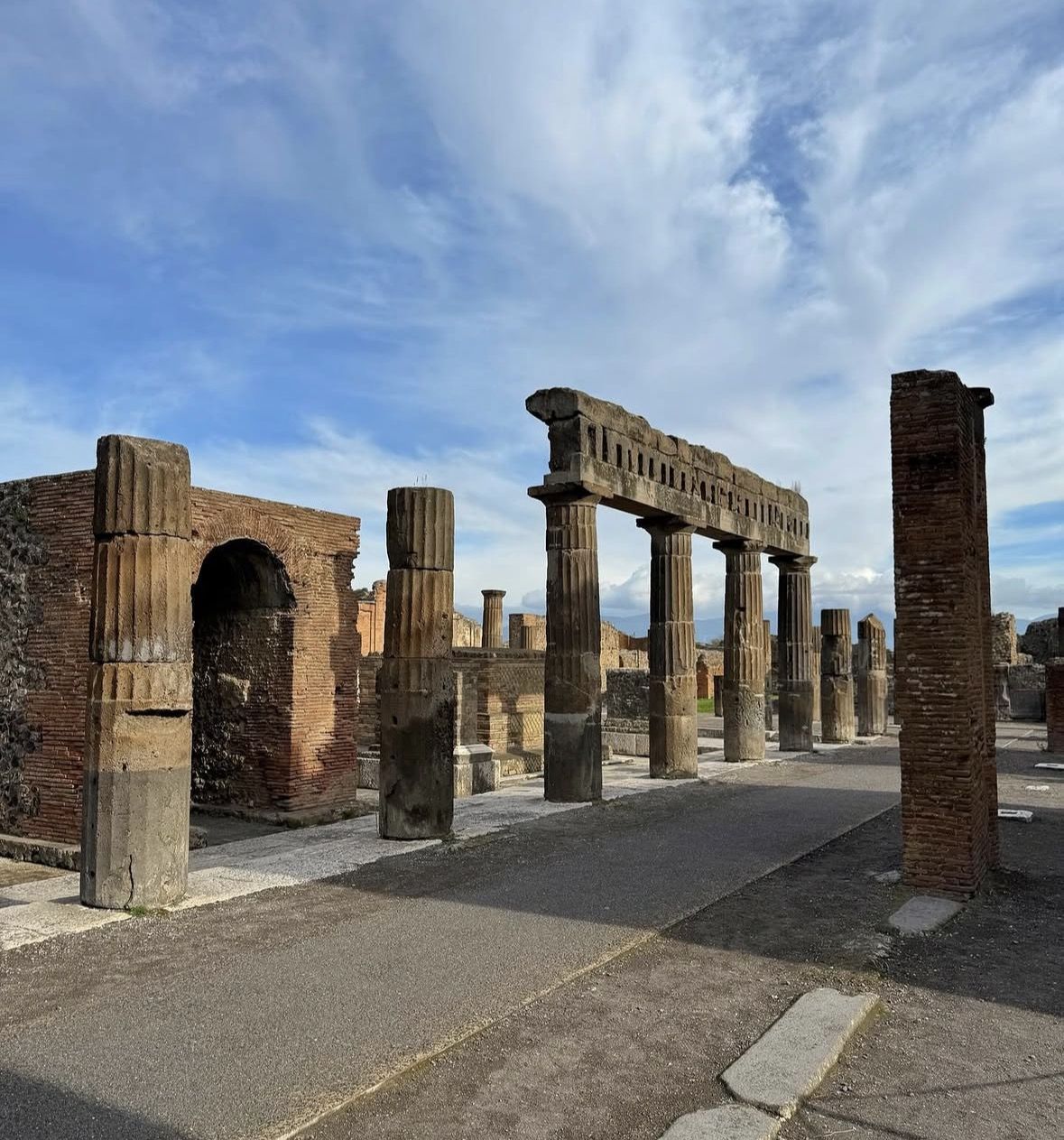
What makes Pompeii utterly unique among the world's archaeological sites is the extraordinary completeness of its preserved daily life. The city that emerges from the excavations is vibrant, complex, and surprisingly modern in its concerns. Pompeii had at least 35 known bakeries, or pistrina, where carbonised loaves of bread have been recovered still sitting in ovens. The city boasted a sophisticated forum, a large amphitheatre built around 70 BC — one of the oldest stone amphitheatres in the Roman world — two theatres, multiple temples, public baths, and an intricate water distribution system fed by the Aqua Augusta aqueduct. Street food culture thrived, with over 80 thermopolia, essentially ancient fast-food counters, identified across the city.
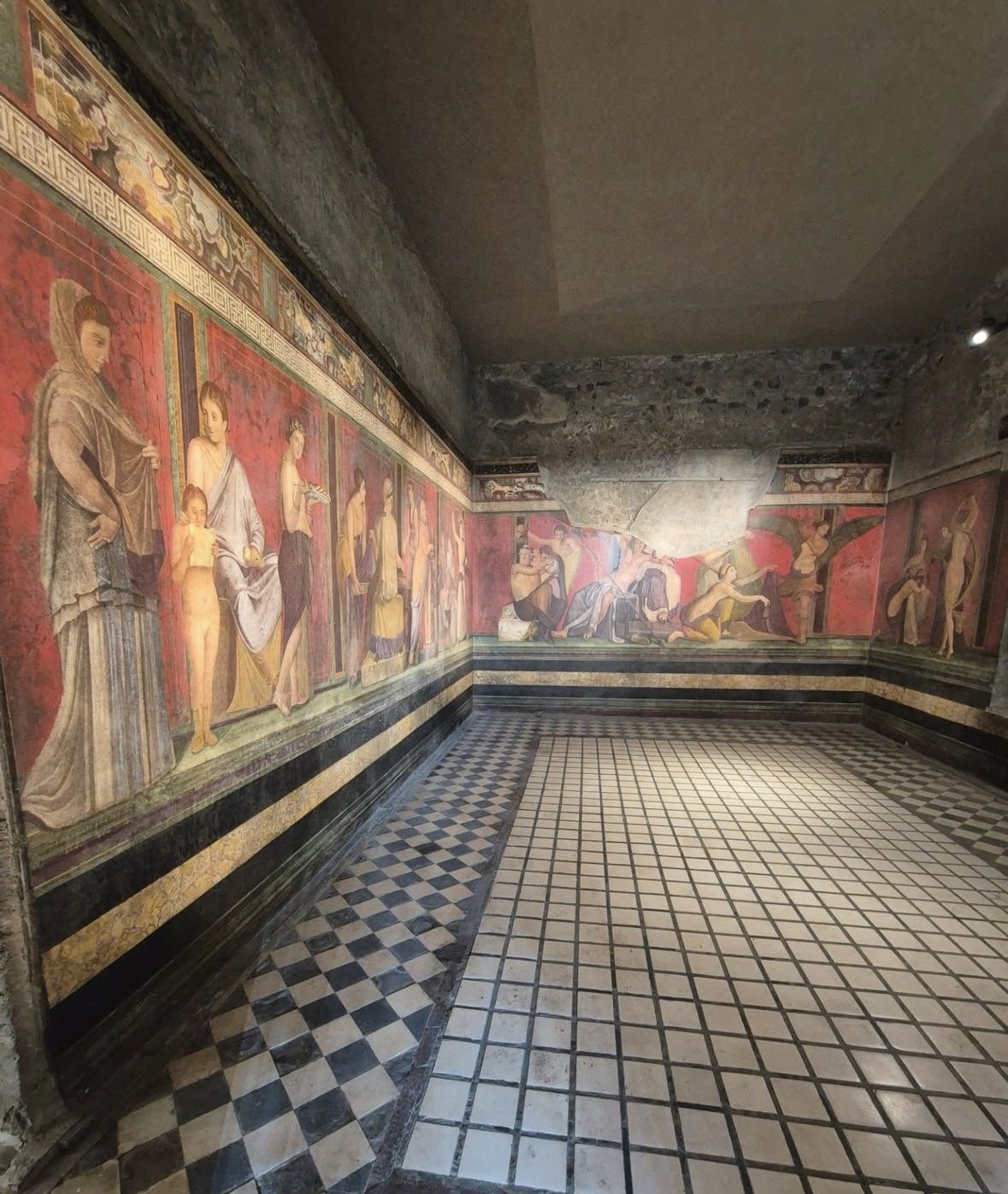
Pompeii's walls speak volumes about its inhabitants. More than 11,000 political graffiti inscriptions have been documented across the city, advertising gladiatorial games, endorsing electoral candidates, and recording personal grudges and declarations of love. Merchants, politicians, and ordinary citizens alike left their marks. The city was also notably cosmopolitan, with evidence of residents from across the Roman Empire, including North Africa and the eastern Mediterranean. Wealthy residents decorated their homes with elaborate frescoes and mosaic floors, many of which survive in remarkable condition. The famous Cave Canem — Beware of the Dog — mosaic at the House of the Tragic Poet remains one of antiquity's most recognisable images, a domestic detail that connects modern visitors directly to ancient homeowners.
On 24 August AD 79, Mount Vesuvius erupted with catastrophic violence, ejecting an estimated 1.5 cubic miles of volcanic material into the atmosphere. The eruption column rose approximately 33 kilometres into the sky before collapsing, sending pyroclastic surges sweeping down the mountain's slopes at speeds exceeding 100 kilometres per hour and at temperatures that may have reached 300 degrees Celsius. Pompeii was buried under approximately 4 to 6 metres of volcanic ash and pumice within hours. Many residents had fled, but an estimated 2,000 people perished and were preserved within the hardened ash. The archaeologist Giuseppe Fiorelli pioneered the haunting technique of injecting plaster into cavities left by decomposed bodies, creating the iconic casts that give Pompeii its most visceral connection to human tragedy.
Pompeii vanished from recorded history remarkably quickly after the eruption. Although the Roman author Pliny the Younger provided a vivid eyewitness account of Vesuvius erupting from across the bay at Misenum — and his uncle, Pliny the Elder, famously died attempting to rescue survivors — the city's precise location was eventually forgotten. Sporadic discoveries of walls and artefacts occurred during the Renaissance, but it was not until 1748 that King Charles III of Naples ordered systematic excavations. Early efforts were more treasure-hunting than scholarship, with frescoes cut from walls and artefacts carried off to royal collections. Nevertheless, the discovery ignited European imagination and helped catalyse the Neoclassical movement in art and architecture across the continent.
The appointment of Giuseppe Fiorelli as director of excavations in 1860 marked a turning point toward genuinely scientific archaeology. Fiorelli introduced stratigraphic excavation methods, created a systematic numbering system for buildings still used today, and developed his celebrated plaster-casting technique for preserving the voids left by decomposed organic matter — human bodies, animals, wooden furniture, and even food. His approach transformed Pompeii from a source of decorative plunder into an irreplaceable record of Roman civilisation. Subsequent directors continued to expand and refine the work, and by the 20th century, Pompeii had become both a landmark of world archaeology and a subject of urgent conservation concern as previously excavated areas began to deteriorate under the pressures of weather, tourism, and neglect.
The 21st century has brought remarkable new discoveries and conservation efforts to Pompeii. The Grande Progetto Pompeii, a major European Union-funded restoration initiative launched in 2012, invested approximately 105 million euros in stabilising and restoring deteriorating structures across the site. Even more dramatically, the Pompeii Archaeological Park launched the Pompeii Regio V excavation project in 2017, which has yielded extraordinary new finds including intact ceremonial rooms decorated with mythological frescoes, a fast-food thermopolium discovered with food residues still visible in serving containers, a well-preserved ceremonial chariot, and the remains of two men — possibly a master and his slave — entombed by the eruption in a remarkably preserved state.
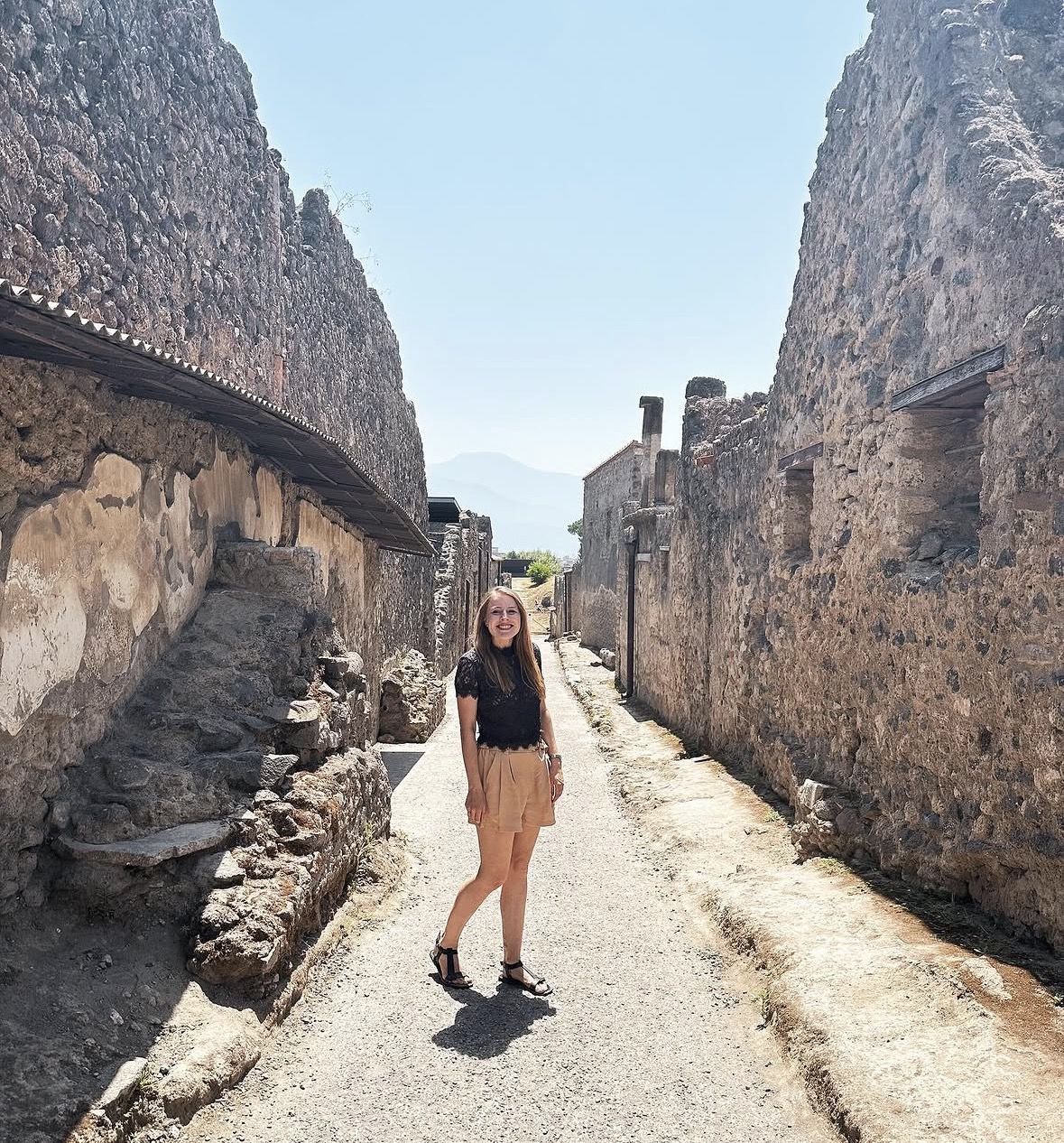
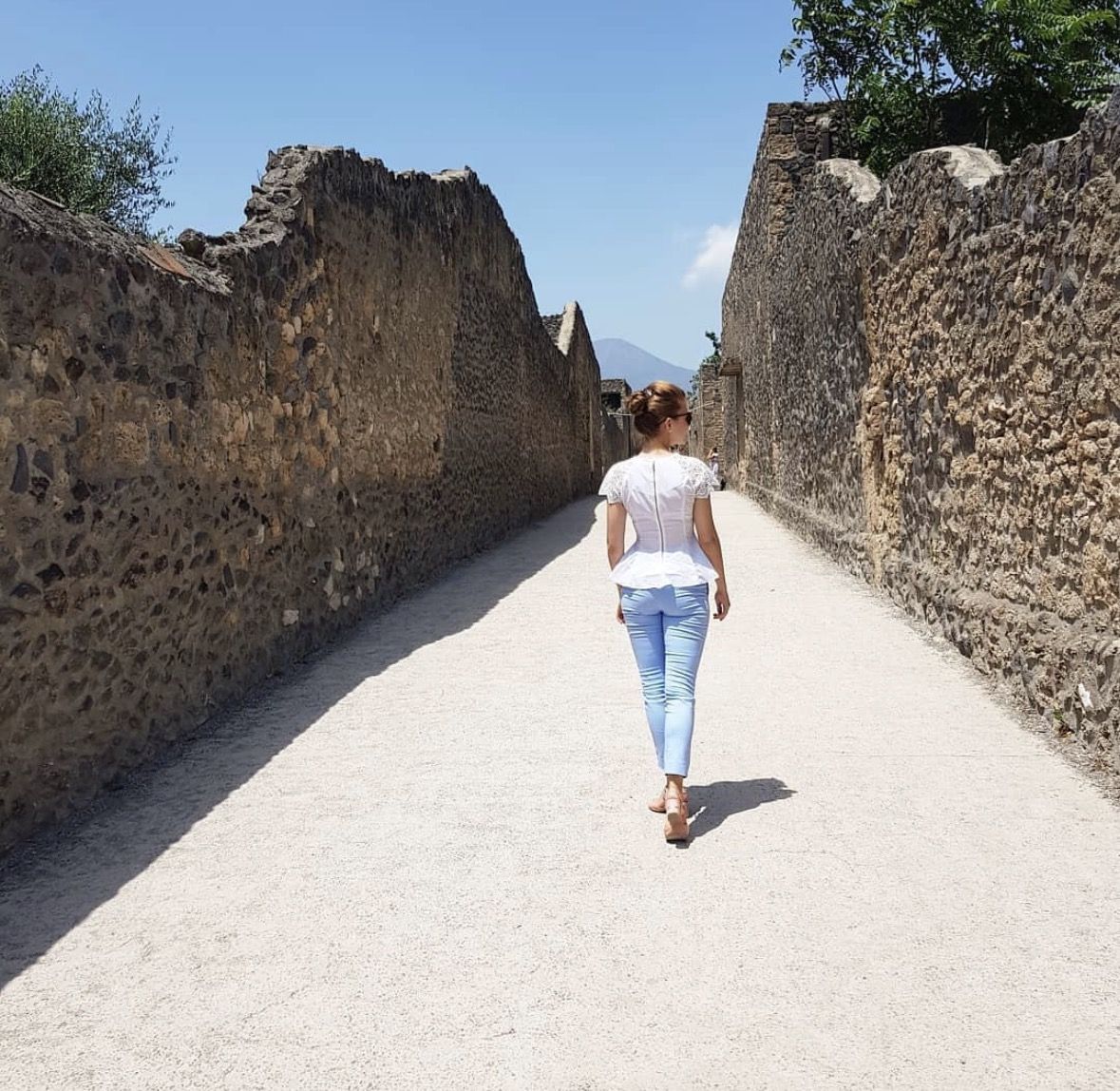
Today, the Pompeii Archaeological Park covers approximately 44 hectares of excavated area — roughly two-thirds of the ancient city — and attracts around 3.5 million visitors annually, making it the most visited archaeological site in Italy and one of the most significant in the world. Visitors can walk the original basalt-paved streets, explore the Forum, wander through private homes adorned with original frescoes, visit the amphitheatre, and view the haunting plaster casts of eruption victims. The nearby Museo Archeologico Nazionale di Napoli houses the finest portable treasures recovered from the site, including the celebrated Alexander Mosaic and an extraordinary collection of erotic art from the Lupanar brothel and private homes.
Pompeii rewards every kind of visitor — the history enthusiast, the casual tourist, the architecture lover, and anyone who has ever wondered what it truly felt like to live in the ancient world. Walking its streets, you sense the uncanny immediacy of a civilisation that was not so different from our own: people who loved their dogs, argued over politics, ate street food, and decorated their homes with care. No photograph or textbook fully prepares you for the emotional weight of standing where history stopped. Whether you explore independently or join an expert-guided tour, Pompeii is an experience that changes how you see both the ancient world and the fragile present we all inhabit. This is one journey that belongs on every traveller's list.
Ready to Experience It Yourself?
Skip the queues and unlock the full story of this extraordinary city with a professionally guided tour that brings every cobblestone, fresco, and human cast vividly to life. From small-group walking tours to private expert-led experiences, there is a perfect option for every type of traveller. Browse our hand-picked Pompeii tours today and secure your place in one of history's most remarkable stories.
Book Your Tour Now