⭐ 4.8 (1636 reviews)

Pompeii Small Group Tour with an Expert Archaeologist

Explore two of the ancient world's most dramatic archaeological sites — Pompeii and Herculaneum — guided by a professional archaeologist who brings the ruins of 79 AD to vivid life.

Two Iconic Roman Sites, One Unforgettable Day

The Pompeii and Herculaneum Small Group Tour with an Archaeologist is the definitive way to experience the twin victims of Vesuvius's catastrophic 79 AD eruption. Beginning at Porta Marina Inferiore, your archaeologist guide leads you through the Forum, grand private houses, and the haunting plaster casts of victims frozen in their final moments. After a short break, the group travels by the Circumvesuviana metro to Herculaneum — smaller than Pompeii yet remarkably better preserved — where you'll stand on the ancient beach where over 300 skeletal remains were discovered. With a capped group size ensuring personal attention, this experience transforms a sightseeing visit into a genuine scholarly journey through one of history's greatest catastrophes.

  • Visit both Pompeii and Herculaneum on a single expertly guided day
  • Archaeologist guide reveals hidden stories behind the ruins and artifacts
  • See the famous plaster casts and the Forum at Pompeii
  • Explore Herculaneum's beach where 300+ skeletal remains were uncovered
  • Small group format means a more personal and immersive experience
Book Now
⭐ 4.8 (1636 reviews) Pompeii and Herculaneum Small Group Tour with an Archaeologist

Why This Pompeii Small Group Tour Stands Apart

Most visitors to Pompeii walk the streets with a map and a vague sense of awe. This tour is fundamentally different. Led by a qualified archaeologist rather than a standard guide, every street, fresco, and artifact is placed in precise historical context. The small group format — strictly capped — means you can ask questions, linger at details that fascinate you, and enjoy a genuinely collegiate atmosphere rather than being shuffled through crowds.

The inclusion of Herculaneum sets this experience apart from single-site tours. Where Pompeii was buried under volcanic ash and pumice, Herculaneum was engulfed by a pyroclastic surge that carbonised organic materials and preserved wooden furniture, food, and fabrics to an astonishing degree. Your archaeologist will draw vivid comparisons between the two sites, deepening your understanding of both the eruption's mechanics and the lives of ordinary Romans caught in its path.

Logistics are straightforward and deliberately stress-free. The tour begins at the accessible Porta Marina Inferiore entrance to Pompeii, and transit to Herculaneum is handled via the local Circumvesuviana line — a short, easy hop that the guide navigates for you. With a 4.8-star rating across more than 1,600 reviews, this ranks among the most consistently praised archaeological tours available in the entire Campania region, making it an easy choice for history enthusiasts of all ages.

⏱️
Duration Approx. 6–7 hours
👥
Group Size Small group (max 15)
📍
Meeting Point Porta Marina Inferiore, Pompeii
Included Archaeologist guide & Circumvesuviana transit
💪
Difficulty Moderate — uneven ancient surfaces
🌐
Languages English, Italian (check at booking)
Pompeii Small Group Tour Everything You Need to Know

Everything You Need to Know Before You Go

What to Bring & Pack

Both Pompeii and Herculaneum are open-air sites with extensive walking on ancient cobblestones and uneven basalt surfaces. Comfortable, closed-toe shoes with strong ankle support are absolutely essential — sandals and flip-flops will leave you exhausted and sore within the first hour. Southern Italy's sun can be fierce even in shoulder seasons, so sun protection is not optional but critical to enjoying a full day outdoors.

Because the tour spans the better part of a day and includes travel between two sites by metro, self-sufficiency matters. Pack enough water for the full duration — fountains exist at Pompeii but not always conveniently placed — and bring light snacks to sustain energy during the break between sites. A small daypack keeps your hands free while you photograph mosaics and plaster casts without juggling bags.

  • Sturdy closed-toe walking shoes with good grip
  • Sunscreen (SPF 30 or higher) and a sun hat
  • At least 1.5 litres of water per person
  • Light snacks or a packed lunch for the mid-tour break
  • Small daypack to keep hands free
  • Sunglasses and a light layer for cooler mornings
  • Fully charged phone or camera for photography

What to Expect on the Tour

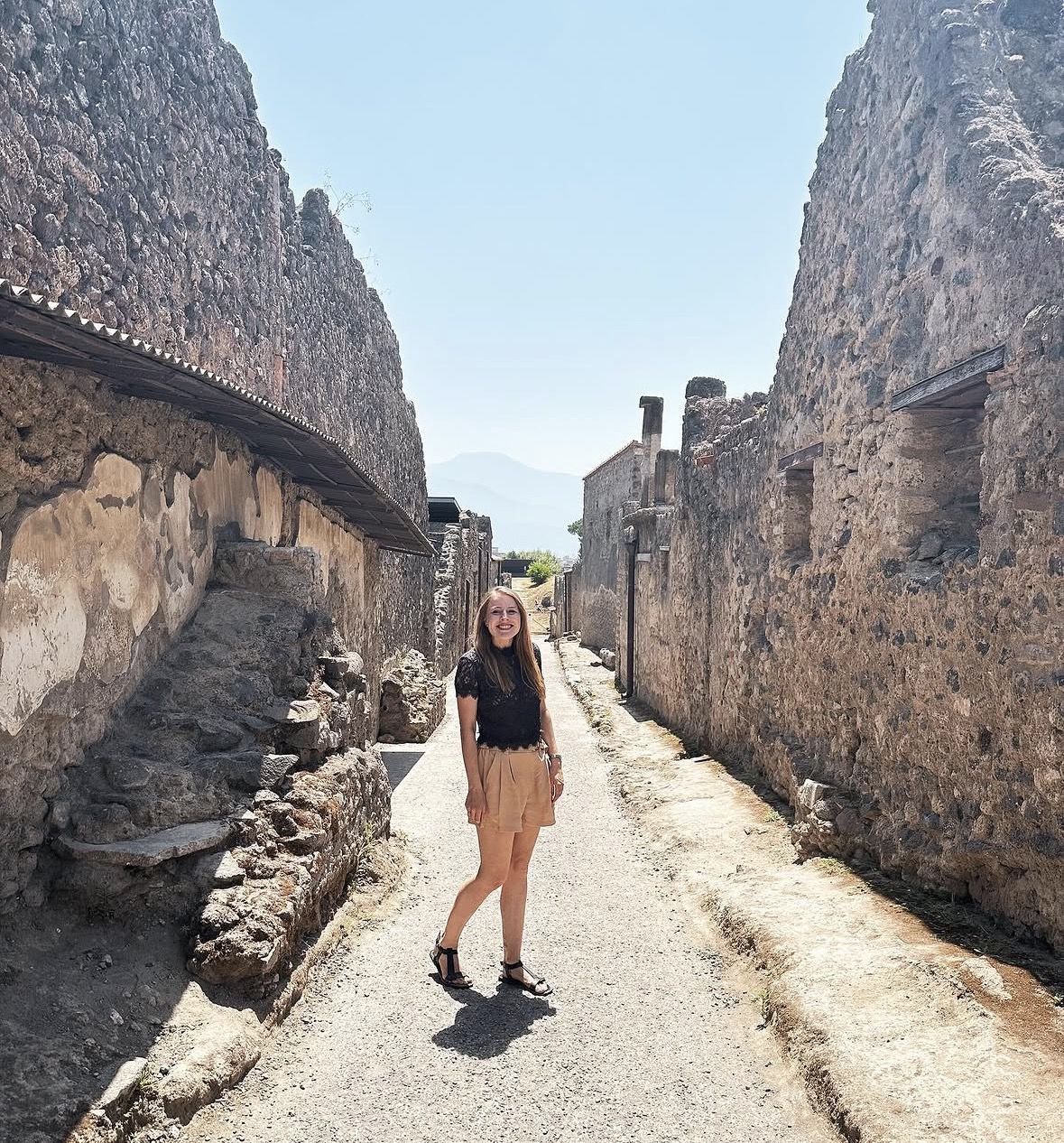
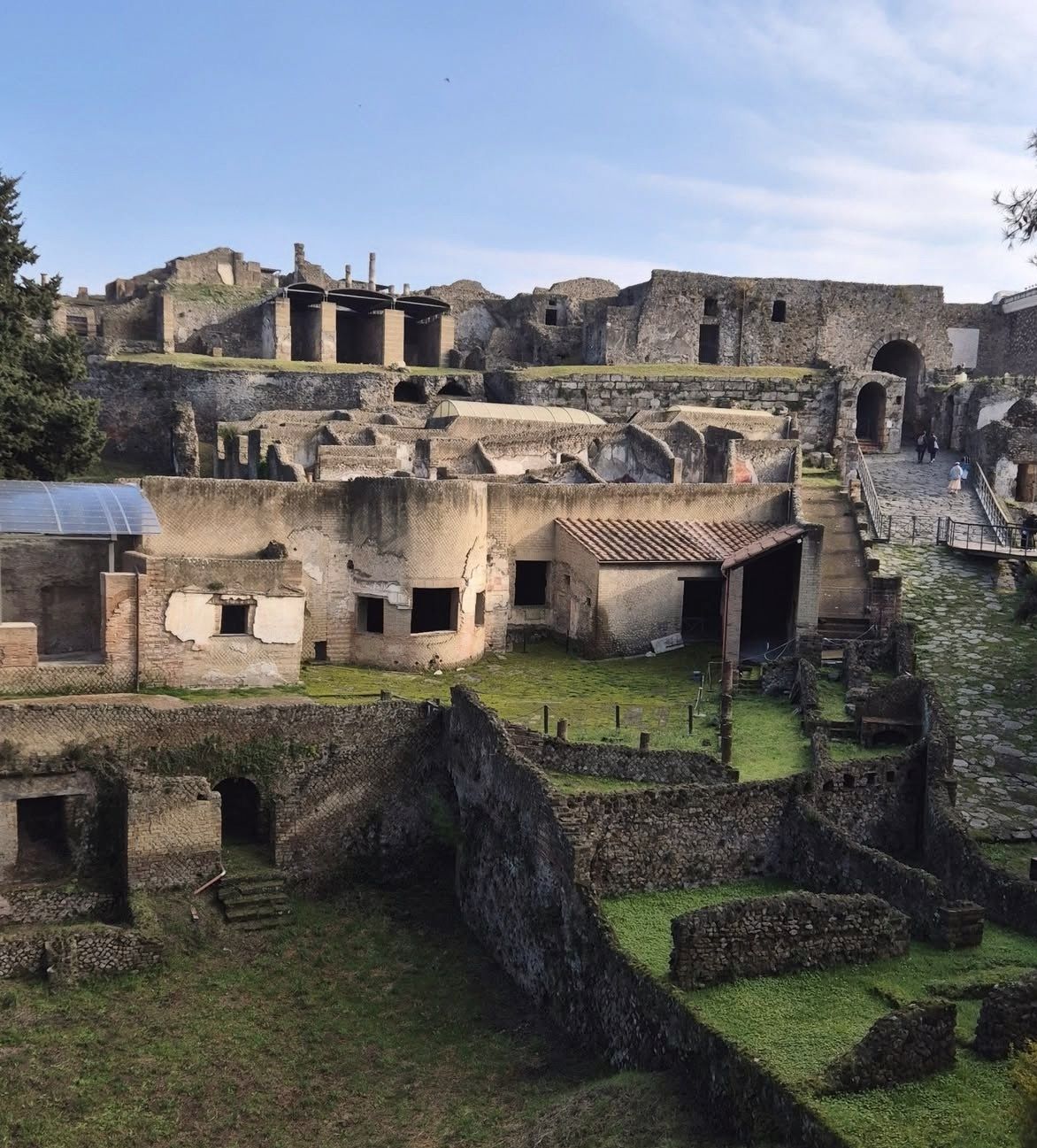
The day begins at Porta Marina Inferiore, Pompeii's most atmospheric entrance gate, where your archaeologist will introduce the eruption's timeline and set the scene before you step inside. From there the group moves through the site systematically but unhurriedly, pausing at the Forum — the civic heart of the ancient city — before exploring residential streets, bathhouses, and the profoundly moving Hall of the Plaster Casts, where victims' final poses are preserved in eerie detail.

After Pompeii, a short break gives you time to grab food or coffee near the entrance before boarding the Circumvesuviana for the brief ride to Ercolano Scavi station. Herculaneum's compact layout means the guide can cover it thoroughly in the remaining hours, including the dramatic seafront boathouses where skeletal remains tell the story of those who fled — but did not escape — the pyroclastic surge. The tour concludes at Herculaneum, leaving you free to return independently.

  • Meet your archaeologist at Porta Marina Inferiore entrance
  • Tour the Forum, major houses, and thermal baths of Pompeii
  • View the iconic plaster casts of eruption victims
  • Mid-tour break near Pompeii before boarding the Circumvesuviana
  • Ride the local metro together to Herculaneum (Ercolano Scavi)
  • Explore Herculaneum's streets and remarkably preserved interiors
  • Visit the ancient beach and boathouses with 300+ skeletal remains

Good to Know Before Visiting

Entrance tickets to both Pompeii and Herculaneum are not always included in the tour price — confirm at booking whether you need to purchase them separately or in advance. During peak summer months (July–August) queues can be significant, so your guide's knowledge of the best entry timing is a genuine advantage. The sites open early, and starting in the morning means cooler temperatures and fewer visitors in the most popular areas.

Accessibility at both sites is limited by their ancient terrain. Pompeii in particular features high-kerbed basalt streets and uneven flagstones that make it unsuitable for pushchairs, wheelchairs, or anyone with significant mobility difficulties. Photography is freely permitted throughout both sites for personal use. There is no strict dress code, but respectful attire is appreciated. Mobile signal is generally good, so offline maps are not strictly necessary but can be a comfort.

  • Confirm whether site entrance fees are included when booking
  • Book in advance — small group spots sell out weeks ahead in summer
  • Arrive at Porta Marina Inferiore at least 10 minutes early
  • The sites are not wheelchair accessible due to ancient terrain
  • Photography for personal use is permitted throughout both sites
  • Circumvesuviana metro tickets are typically inexpensive — carry small cash
  • Check the weather forecast; there is very little shade at Pompeii

Pompeii Small Group Tour What Visitors Are Saying

See why travelers consistently rate this pompeii small group tour as one of the best ways to experience the ancient ruins.

★★★★★

"Our archaeologist guide, Marco, brought the city to life in a way no guidebook ever could. He pointed out hidden frescoes and explained the daily routines of Roman citizens with incredible depth. The small group size meant we could ask questions freely without feeling rushed. Absolutely the highlight of our entire Italy trip."

SM
Sarah M.March 2025
★★★★★

"I had visited Pompeii years ago with a large group and found it overwhelming and impersonal. This experience was completely different — our guide kept the group intimate and took us through areas most tourists simply walk past. The addition of Herculaneum was a revelation; it's remarkably well-preserved and far less crowded. I cannot recommend this enough to anyone serious about ancient history."

JT
James T.January 2025
★★★★☆

"A genuinely excellent excursion with a knowledgeable guide who clearly has a passion for Roman archaeology. We spent just the right amount of time at each site, and the skip-the-line access at both locations saved us well over an hour. I docked one star only because the afternoon sun at Pompeii was intense and shade is scarce — bring a hat and plenty of water. Overall, a fantastic way to see both sites in a single day."

CR
Claudia R.April 2025
★★★★★

"Booking this pompeii small group tour was the best decision we made for our Amalfi Coast holiday. Our archaeologist walked us through the Forum, the Lupanar, and the Villa of the Mysteries with expert commentary that connected everything together. Herculaneum genuinely surprised us — the preserved wooden beams and mosaics are stunning. The group never exceeded eight people, which made the whole experience feel personal and unhurried."

DK
David K.February 2025

Pompeii Small Group Tour Frequently Asked Questions

Everything you need to know before you book — answered clearly and honestly.

The Pompeii and Herculaneum Small Group Tour with an Archaeologist includes a licensed archaeologist guide for the full duration, skip-the-line priority entrance tickets to both Pompeii and Herculaneum, and all entrance fees. Transport between the two archaeological sites is also covered so you never have to worry about navigating local trains or buses on your own. Groups are capped at a maximum of eight participants, ensuring you receive genuine attention and have space to ask detailed questions. A light snack stop is scheduled between sites, though meals are at your own expense.
With a large group, guides must keep moving to manage crowd dynamics, which means you rarely linger at the details that make Pompeii so extraordinary. On this experience, the limited group size allows your archaeologist to stop, crouch down beside a mosaic, and explain exactly what you are looking at for as long as needed. You can ask follow-up questions without holding up thirty strangers behind you. The intimate format also means the guide can tailor commentary to the interests of the people in your specific group, whether that leans toward architecture, social history, or everyday Roman life.
Absolutely not — the archaeologist guides are experienced at pitching their commentary to all levels, from complete beginners to history enthusiasts. They typically begin with a concise overview of the 79 AD eruption and the social structure of a Roman city before diving into the specific buildings you are walking through. Curious first-timers and seasoned history travelers consistently report leaving with a depth of understanding they did not expect. If you do want to prepare, a quick read of the Wikipedia article on Pompeii the night before will enrich the experience even further.
Both cities were buried by the same eruption of Vesuvius, but in very different ways — Pompeii was smothered by falling ash and pumice, while Herculaneum was engulfed by a fast-moving pyroclastic surge that carbonised organic materials rather than destroying them. This means Herculaneum preserves wooden furniture, food remains, and painted walls that simply do not survive at Pompeii. Together, the two sites give a far richer and more complete picture of Roman urban life than either could alone. Most independent visitors skip Herculaneum because they run out of time or energy, which is one of the key practical advantages of having a structured itinerary on a guided visit.
The meeting point is at the main entrance of the Pompeii archaeological park, near the Pompeii Scavi–Villa dei Misteri train station, which is served by the Circumvesuviana line running frequently from Naples Porta Nolana and Sorrento. From the Amalfi Coast, the most practical route is a ferry or bus to Sorrento followed by the Circumvesuviana. Full meeting-point details with a map link are confirmed in your Viator booking voucher. We recommend arriving ten minutes early so the group can set off on time and make the most of the cooler morning hours.
Comfortable, closed-toe walking shoes are essential — the archaeological sites are paved with uneven basalt stones that can be surprisingly hard on feet and ankles. Wear lightweight, breathable clothing and layer up in cooler months, as the ruins offer little shelter from wind. A hat, sunglasses, and high-factor sunscreen are strongly advised from April through October when the heat can be intense. Bring at least 1.5 litres of water per person, as refill points inside the sites are limited. A small daypack with a light snack will keep your energy up across the full day.

Ready to walk through history with an expert by your side on the Pompeii and Herculaneum Small Group Tour with an Archaeologist?

Reserve Your Spot

Ready to Walk Through Ancient History?

Spots on this archaeologist-led tour sell out fast, especially in spring and summer. Lock in your place today and experience Pompeii and Herculaneum the way they deserve to be seen.

Book this tour →
📅 Book Now